Macro investors
Do you do like everyone else
and earn (or lose)
'just' like the index?
Macro-thematic investing: global trends and long-term structural shifts to benefit from their future growth, without depending on traditional sectors or short-term market swings.
Warning: Investments involve risk
This site does not constitute investment advice or a recommendation to act, and does not replace professional judgment tailored to the investor's needs.
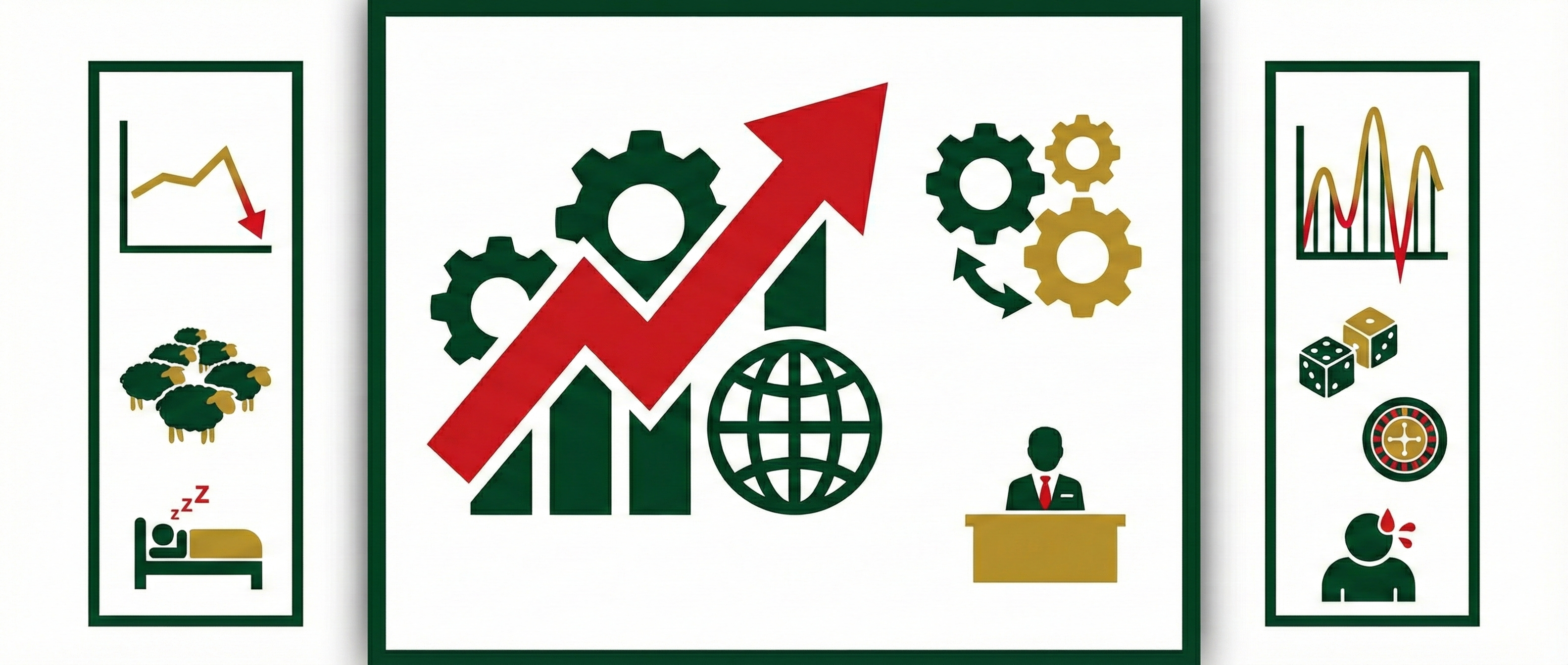
I don't predict the future. I manage risk.
Most investors stick to the same indexes and hope for the best. My approach is different. Instead of 'setting and forgetting,' I manage risk with creative diversification. The result? In most years I achieve excess returns over the market through smart diversification that doesn't depend on Wall Street sentiment alone.
Advanced AI analysis
I don't rely on 'black boxes.' As someone who has built AI systems and knows the code from the inside, I use the huge advantages of the technology—speed and the ability to scan vast parts of the market in an instant—while being well aware of its limits. Analysis combines algorithms for early opportunity scanning with human critical thinking that filters noise. That combination lets me 'fish' for the most precise investments with an efficiency that manual analysis alone can't match.
The diligent investor
Passive ('set and forget') investing is a great solution for many, but it's not the whole picture. A few hours of investing—once a month—lets you fine-tune the portfolio for the medium term too, instead of relying only on automatic solutions for the long term.
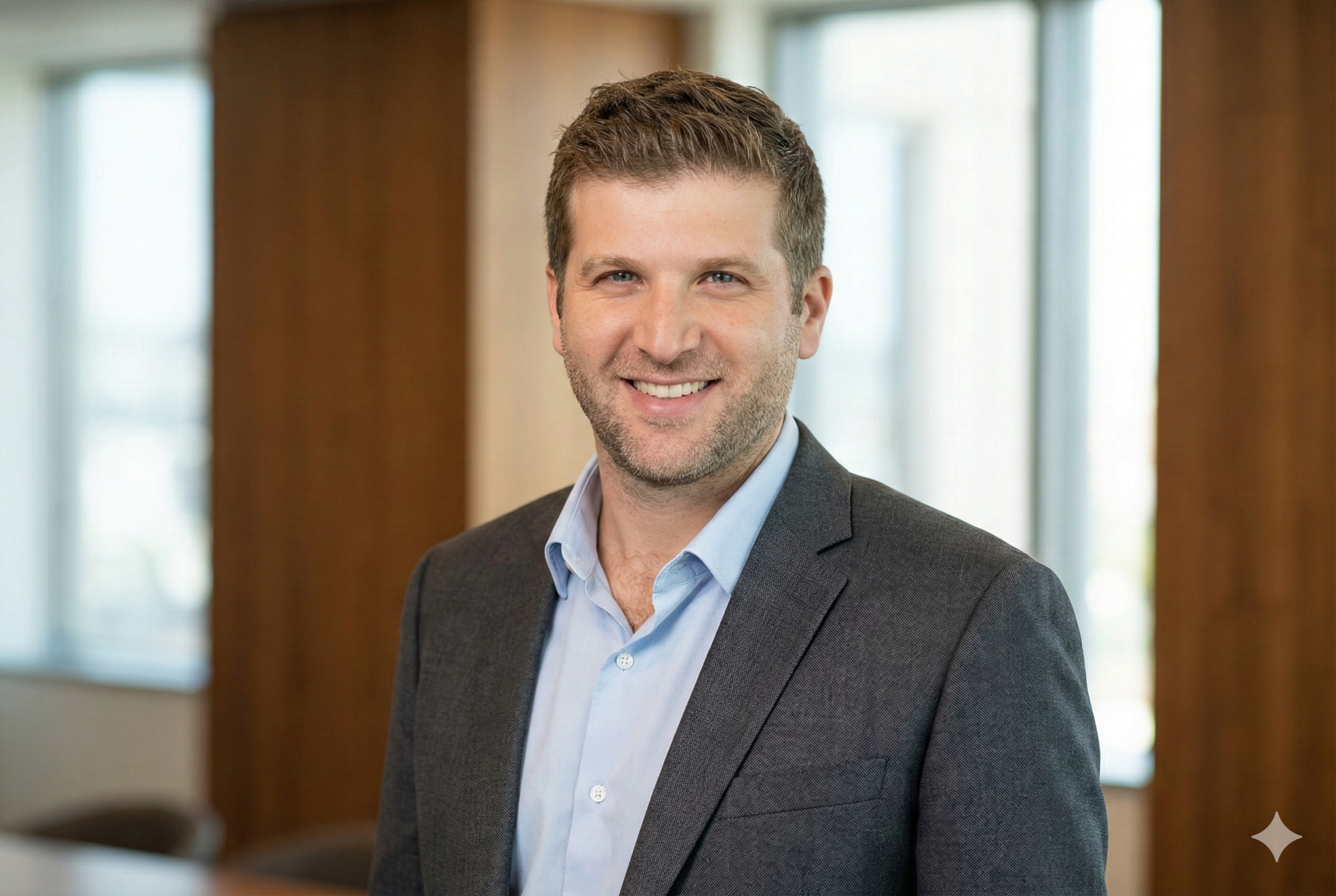
Who am I?
I didn't get here by chance. It all started at 21, when life led me to inherit half an apartment. As a young man, I had to learn quickly how to manage a large amount of money wisely to secure my future.
In the 16 years since, the world of investing became my serious playing field. I founded and sold startups, managed private investments in the stock market (often beating the indexes), and built a system for finding and improving real estate in Europe.
At the same time, I built a career managing development teams at successful tech companies. There I learned something simple: managing family wealth requires the same methodology, cool head, and seriousness used to run a technology company.
I left tech not to manage people's money (I'm not an investment advisor or portfolio manager), but to bring the tools of management, strategy, and analytical thinking from entrepreneurship and development to personal investing. My goal is to help you build your own financial 'startup' by yourselves.
A bit about the method
There's a sentence every beginner investor knows by heart: 'Past performance does not indicate future results.' We're used to saying it about specific stocks or mutual funds. But have you ever stopped to think that this sentence also applies to investment methods?
For a decade and a half, the passive approach (buying a broad index with zero fees) was the undisputed queen. The statistics were overwhelmingly in its favor. But financial history teaches us that when everyone agrees on something, that's usually when the rules start to change. The method that always worked won't necessarily always work, and this time the reason isn't purely economic—it's technological.
The numbers that should light a red (or green) bulb
Let's look at the data from the past year with the care it deserves. On one hand, leading passive indexes (like the S&P 500 or Nasdaq 100) did an excellent job with returns of around 17%–21%. That's the 'anchor' of the portfolio, and it worked. On the other hand, when you look at ETFs actively managed by AI models, the picture is different. Despite higher fees (10x or more than passive), returns there ranged around 30% and even peaked above 60%. Could that gap hint that the market is no longer 'efficient' in the way we knew? (I don't know—and neither do you.)
So let AI manage my money?
No. If it manages everyone's money we'll see model convergence. If everyone uses the same models in the same way to make investment decisions, everyone will buy and sell the same assets at the same time. The result will be huge bubbles and flash crashes. The human 'herd' will simply be replaced by an 'algorithmic herd.'
Maybe the balance is in the middle?
That's where my thesis comes in:
The hybrid investor
In the new world, the advantage isn't with the machine alone or the human alone. It's in the combination:
- The human (you): You are the compass. You bring intuition, understanding of the broad geopolitical context, ethics, and 'gut feeling' based on life experience—things a statistical model can't quantify. (What's required of you? To care, to live the macro-economic world, politics, economy, culture, technology.)
- The AI (the team): It's not the manager; it's your research department. It's the team that reads 5,000 financial reports overnight to find 'alpha.' It's the team that analyzes macro trends in real time. And it can also be the team that challenges your investment—try asking the AI to disprove your investment thesis. It's a risk-management tool with no substitute.
Food for thought
The old debate between 'active' and 'passive' is becoming irrelevant. The new question is 'hybrid' vs 'outdated.' Don't let technology replace your judgment, but don't ignore its ability to move mountains and slaughter sacred cows. Build yourself a 'personal hedge fund' where you're the CEO steering the ship, and AI is the engine that lets you sail faster and spot icebergs before they hit. Passive investing is still an important anchor, but in an age of technological disruption, those who rely only on 'what was will be' may find the future has slipped away.
Go on, make money.
Hybrid investor, not speculator
Analysis of countries' geopolitical conditions
Deep understanding of indexes and sectors
Meaningful risk reduction vs investing in a single company
Don't let your financial future happen by itself
Your money worked hard for you. Now it's your turn to work hard for it.